skip navigation

MRSC Insight Blog


Posts for Steve Butler

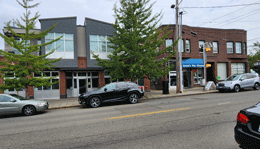
From Vacant to Vibrant: Transforming Empty Downtown Storefronts

Local governments looking to transform empty downtowns can employ a variety of approaches to revitalize these areas, including allowing vacant storefronts to be used for alternative purposes, like art displays, small scale manufacturing, or pop-up commercial installations.

Read more

Updating Local Regulations to Encourage More Accessory Dwelling Units

Increasing the number of accessory dwelling units can build more housing stock in a community. What changes can agencies make to local zoning codes that might encourage this type of development among homeowners and developers?

Read more

A Local Government’s Role in Regulating Battery Energy Storage Systems

With the growing use of battery energy storage systems (BESS), more public and private operators will want to locate these systems in Washington. What can cities and counties learn from Sumner, Arlington, and other early adopters of BESS regulations?

Read more

Battery Energy Storage Systems – Coming Soon to Your Community?

Battery energy storage systems offer new ways to store electrical power, and their modular nature means they can be configured to meet many uses. Local governments should determine how to incorporate such facilities into their existing land use codes and regulations.

Read more

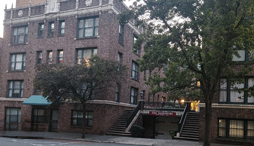
An older, multi-unit affordable housing building in Seattle

Protecting Your Community’s “Naturally Occurring Affordable Housing”

Within every community exists naturally occurring affordable housing, which can help community members who might otherwise be priced out of a hot local housing market. Local governments can help to preserve this housing through specialized policies and programs.

Read more

Two people look on while a third presents an architectural design

Impending Deadline of January 1 to Address SB 5290’s New Development Timelines

Beginning in 2025, GMA-planning counties and cities must follow new state-based timelines for issuing a final decision on applications for land use review. However, localities can — up to end of this year — adjust their timelines for review (and bypass the state ones).

Read more

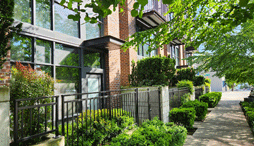
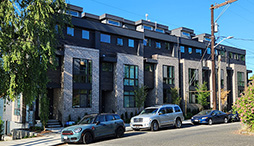
Modern, multi-unit residences on city street

The Importance of Housing to Downtown Revitalization

As part of a broader strategy to revitalize its downtown, a local government can play a significant role in promoting more housing options, making downtown an inviting place to work, play, and live.

Read more

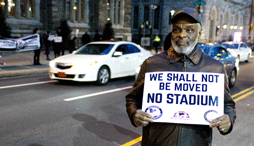
An older man holds a sign in protest of plans for a new stadium

Dealing with Housing Displacement in Your Comprehensive Plan

Housing displacement brought about by gentrification can severely disrupt existing neighborhoods. Thanks to legislation in 2021, any GMA-planning local government updating a comprehensive plan must also address and include anti-displacement strategies to protect residents.

Read more

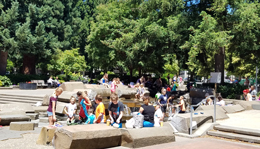
Kids at Vancouver's Esther Short Park

The Importance of Public Space to Downtown Revitalization

When looking to revitalize their downtowns, cities and towns can focus on innovative strategies to draw visitors in, such as adding attractive, safe, and enjoyable parks, plazas, and open spaces, or offering programming/recreational activities in existing public spaces.

Read more

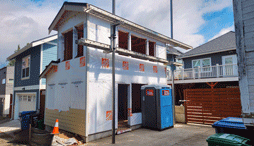
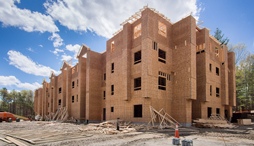
New multi-unit construction on empty lot

Using Surplus Public Property to Create New Affordable Housing

Does your agency own surplus property? RCW 39.33.015 allows public agencies to transfer, lease, or dispose of surplus real property to a public, private, or nongovernmental entity at low or no cost if it is for public benefit — and 'public benefit' includes affordable housing.

Read more

Diverse group of seated people participating in a meeting

Comprehensive Planning Tips, with a Focus on Implementation

A successful comprehensive plan will help guide community growth for decades into the future. When updating a plan, a local government should focus on using a strong planning process, conducting robust community engagement, and focusing on plan implementation. 

Read more

Major Changes to Washington's Housing Laws

Two of the more significant housing laws adopted this year are HB 1110, which requires certain cities to allow "middle housing" in residential zones, and HB 1337, which requires all GMA-planning cities and counties to allow accessory dwelling units (ADUs) in residential areas.

Read more

Impact Fees — Local Government Do’s and Don’ts

Impact fees can be used by a local government to help pay for infrastructure costs caused by new development, but there are both complexities and legal requirements an agency should consider before establishing an impact fees program. 

Read more

Infill Housing Approaches: Targeting the Missing Middle and Accessory Dwellings

As cities and counties look to expand housing supply in their communities, many are considering infill development, or developing vacant or under-utilized parcels within existing, developed areas. Missing middle housing and accessory dwelling units are two options to consider.

Read more

Increasing Local Housing Supply Through Missing Middle Housing

Local governments seeking to expand housing options may want to consider a missing middle program that champions use of housing types which may fly under the radar, such as cottage housing, duplexes, and triplexes, alongside more trendy approaches like live-work developments. 

Read more

A New Approach for Dealing with Conditional Uses in Your Zoning Code

Conditional use permits, most often used for certain land uses that might not normally fit into a zoning category but could work if the proposed use meets certain conditions, can be made into a more efficient and effective zoning tool with some modifications. 

Read more

Preserving Affordability Through Manufactured Home Park Zones

Manufactured homes are often overlooked yet can be an important affordable housing option. Local governments can protect them by creating new zones (or strengthening existing regulations) that designate areas specifically for manufactured home parks. 

Read more

Continued Use of the Public Right-of-Way for Outside Dining

This blog examines the key components of local parklet/streatery programs that were established during the early days of the COVID-19 pandemic and how Washington’s local governments are now evaluating the future of those programs.

Read more

Using Affordable Housing Overlay Zones to Reduce the Risk of Displacement

Increased zoning can sometimes result in gentrification of a community and the displacement of vulnerable populations. Affordable housing overlay zoning is a tool that can help to increase density without triggering the unintended consequences of gentrification and displacement.

Read more

What Is a 15-Minute City? (And Why You Should Care)

What types of amenities and services can you get to within 15 minutes of leaving your front door? The 15-Minute City concept encourages the development of walkable neighborhoods where a variety of services are within easy reach. 

Read more

LOAD MORE