skip navigation

MRSC Insight Blog


Posts for Climate Change
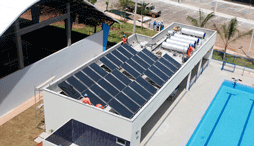
Leases: A Critical Tool for Clean Buildings Act Compliance

The 2019 Clean Buildings Act creates performance standards for energy and water use in buildings. Building owners, including public agencies, can leverage lease agreements to support compliance with the law, reduce risk, and delineate landlord/tenant responsibilities.

Read more

Local Government Initiatives for Green Buildings in Washington: Policies, Codes, and Incentives

In Washington, the buildings sector is the state's second-biggest carbon polluter behind transportation, accounting for more than a quarter of statewide greenhouse gas emissions. How are local governments encouraging the development of green buildings to reduce emissions locally?

Read more

Indoor of a green building under construction

Advancing Green Buildings: Washington’s Clean Buildings Law and Green Building Practices Local Governments Can Adopt - Part 1

Since residential and commercial buildings account for 27% of statewide greenhouse gas emissions in Washington State, many local governments are implementing green building programs as part of a larger effort to reduce emissions and build healthier local communities.  

Read more

Tax-Exempt Entities: New Source of Funding Available for Clean Energy Projects

Local governments that undertook clean energy projects may be able to recoup some project costs through clean energy federal tax credits. Thanks to 2022 federal legislation, these credits are now available to certain tax-exempt entities as direct, elective payments. 

Read more

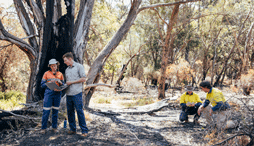
Team works together to collect data and make a wildfire plan

Is Your Community Ready for a Wildfire?

Which neighborhoods are most at risk for wildfire in your community? What are the priority actions your local government should take and where should these be concentrated? Developing a community wildfire protection plan can help an agency answer these questions.

Read more

A woman sits on a bench in the hot sun

Adapting to Extreme Heat: Can Cities Prepare for a Hotter Future?

Global temperatures are projected to warm by 2.7 degrees Fahrenheit by 2050, raising the risk for heat-related illness and death to occur. Some cities and counties are making plans to keep communities safe and taking action to mitigate heat-related impacts.

Read more

Local Government-Supported Urban Agriculture Adds Equity and Climate Change Benefits for the Public

Urban agriculture is more than just raising fruits and vegetables in a city setting: It can bring new economic opportunities, act as a small business incubator, be a source of fresh and healthy produce in food deserts, and reduce a community's greenhouse gas emissions. 

Read more

Tree on stack of silver coins and hand filling glass jar with coins

Implementation Strategies for Climate Action and Sustainability Plans, Part 2

The Inflation Reduction Act (2022) funds infrastructure projects focused on clean energy and climate resilience through tax credits. With a total of $47 billion available to local governments, even the smaller funding programs established through the Act are significant.

Read more

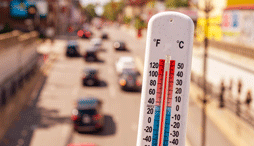
A thermometer showing a temperature of 100+ against a background of an urban street

New Report Outlines How to Save Lives from Extreme Heat

Written by a guest author with the University of Washington's Climate Impacts Group, local governments now have a new resource to call on for ideas on how to protect communities during extended periods of extreme heat. 

Read more

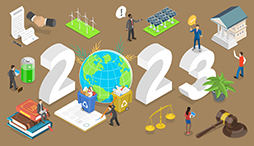
Several small images suggesting environmental and pollution prevention laws against the word 2023

New Legislation Related to Climate and the Natural Environment

In 2023, state legislators passed several bills addressing environmental concerns, including new climate elements for comprehensive planning, making impact fee revenue available for new bike and pedestrian facilities, and an optional permit process for clean energy projects. 

Read more

A vendor stall at an outdoor market featuring produce, cut flowers, and potted plants

Planning for Local Food Systems: A Whatcom County Case Study, Part 2

After extensive planning and community engagement, Whatcom County is developing a comprehensive local food system plan. See Part 2 of the series on the plan's development and lessons learned.

Read more

A close up of rows of berries at the Whatcom County Farmer's Market

Planning for Local Food Systems: A Whatcom County Case Study, Part 1

What is a local food system plan and why would a local government want to develop one? Whatcom County is one of a few local governments statewide developing such a plan, and county staff share insight into the process. 

Read more

Many hands in a multitude of colors surround and stretch towards the earth

Centering Equity in Climate Plans and Programs

As new legislation (HB 1181) has added equity components to the Growth Management Act, it is essential to understand what climate equity means and how it is successfully being carried out by local governments across the state.

Read more

A thermometer showing a temperature of 100+ against a background of an urban street

Protecting Communities When the Heat Is On

How can local agencies prepare for extreme heat events, including protecting those populations most vulnerable to heat-related illnesses and death? By looking carefully at how heat impacts various neighborhoods, an agency can take a variety of approaches to maximize services. 

Read more

Stack of wooden blocks with green images of net-zero and other climate actions

Implementation Strategies for Climate Action and Sustainability Plans, Part 1

Local governments have been using various strategies to help implement their climate action and sustainability plans, including working with community partners, tracking progress on climate-related goals, and engaging residents through educational programs and incentives.

Read more

View of a little public park with trees and greenery along Seattle's city hall exterior

For More Equitable and Livable Cities, Consider Trees

As cities and other urban areas in Washington State continue to grow and change, an urban forestry management plan can provide a coordinated, long-term vision for managing the urban tree canopy to ensure the continued livability of local communities.

Read more

Integrating Best Available Science: New Tools for Land Use Planning & Emergency Management

The state's Washington Geological Survey is offering new and updated resources to help local governments integrate the best available science into their land use planning and emergency management efforts. 

Read more

Shows a fleet of mid-sized electric vehicles being charged at a public charging station

Tips for Transitioning Fleet Vehicles to Electric

Electric vehicle (EV) fleets can help an agency save money and meet greenhouse gas emissions reduction targets, but transitioning fleets to EVs will be a major undertaking. It helps to start small and to pair the program with the build out of local EV charging infrastructure.

Read more

An image of 3 people at a recycling center sorting out types of recycled material

Local Governments Pursue Zero-Waste Measures

Zero-waste measures for local governments run the gamut from multi-year materials management projects to consumer education on how to recycle or compost properly. The end goals are to reduce greenhouse gas emissions and responsibly manage public resources.

Read more

Map of Washington State showing how frequency of days reaching a humidity index over 90 degrees might change from 2050-2079

A New Climate Planning Tool for Local Governments

The online tool, Climate Mapping for a Resilient Washington, is a compilation of the best existing climate projection information for the state and includes information on state-specific climate hazards such as reduced snowpack, sea level rise, flooding, and more. 

Read more

LOAD MORE